

What to put on a service page so people actually call
Most small business service pages read like dry corporate resumes or generic brochures. They talk endlessly about “synergy” and “excellence”, but fail to answer the basic questions buyers actually have. Here is the exact layout that turns website visitors into phone calls and booked jobs.
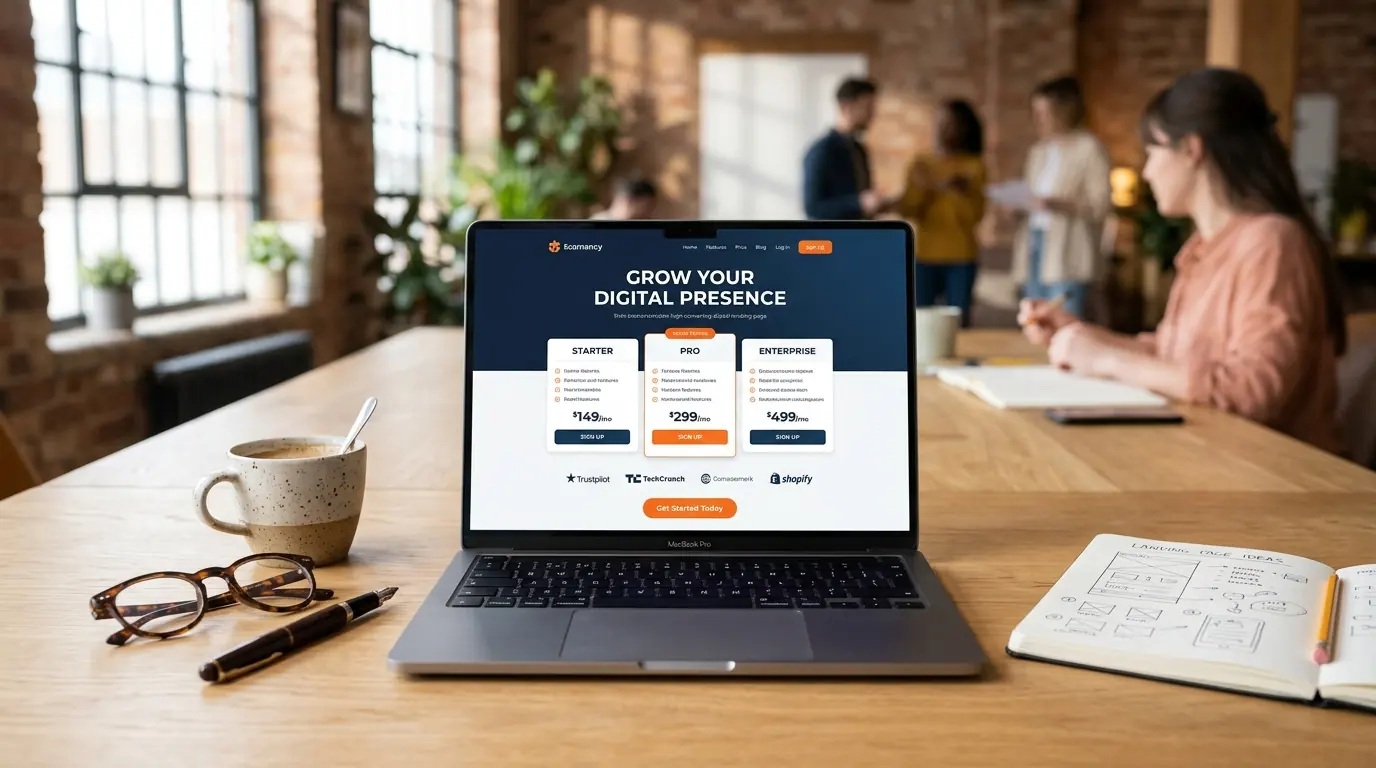
The single goal of a service page
When someone lands on your service page, they are rarely browsing for entertainment. They have a specific problem: their shower is leaking, their tooth hurts, their accounts are overdue, or their roof lost tiles in a storm. They are evaluating two things in under ten seconds:
- “Can this business fix my exact problem in my area?”
- “Can I trust them not to rip me off, mess up my house, or waste my time?”
If your service page answers those two questions clearly and makes the next step effortless, you will win the customer. Here is the 7-part blueprint to build service pages that convert.
People don’t hire businesses that hide their pricing or force them to fill out 12 form fields. High-converting service pages share honest ballpark prices, show real photos of finished work, and offer a simple one-click call or 30-second enquiry form.
1. A headline that names what, who, and where
Ditch clever slogans. Your headline should be a plain, descriptive statement of service and location. For example:
- Weak: “Quality craftsmanship for modern living” (Meaningless fluff)
- Strong: “Emergency boiler repair in Cheltenham & Gloucester | Gas Safe registered, 2-hour response”
Follow the headline with a two-sentence sub-heading that sets immediate expectations: “Available 7 days a week. We diagnose and repair all major combi and system boilers with fixed diagnostic fees and no hidden callout charges.”
2. Exactly what is included (and what isn't)
Break your service down into clear bullet points. Customers hate ambiguity. Outline exactly what happens when they book you:
- Comprehensive visual and pressure safety inspection.
- Flue gas analysis to verify boiler combustion efficiency.
- Cleaning of burner, spark electrodes, and condensate trap.
- Written safety certificate provided immediately upon completion.
It is equally helpful to mention what isn't included or who this service is not for. Stating “We specialise strictly in domestic residential boilers up to 45kW and do not service industrial plant rooms” prevents wasted phone calls and builds immediate trust with homeowners.
3. Ballpark pricing and cost transparency
The number one question every customer has is: “How much will this cost?” Websites that hide all pricing behind “Call for a bespoke quote” create anxiety. Buyers assume that if you don't list prices, you are either extraordinarily expensive or you adjust your prices based on how affluent their street looks.
You don't need to quote an exact fixed price for complex custom jobs, but you should always provide a ballpark range or starting rate:
“Standard annual boiler servicing is a fixed £85 + VAT. Emergency diagnostic visits are £65 for the first hour, which covers 80% of minor repairs. We always provide a written price before fitting any replacement parts.”
Transparent pricing immediately filters out tyre-kickers and encourages serious buyers to pick up the phone.
4. Real photos of completed work (no stock models)
Nothing kills credibility faster than cheesy stock photos of a handsome American male in a sterile hard hat pointing at a blank blueprint. Modern consumers recognize stock photography in a fraction of a second, and it makes your business look like an offshore marketing front.
Use real photos taken with a smartphone on actual local jobs: your branded vans parked on a recognizable street, your engineers in clean company polo shirts, before-and-after shots of installed appliances, and genuine workspace photos. Authenticity beats slick corporate design every single time.
5. Specific local customer proof and reviews
Don't bury all your reviews on a generic testimonials page that nobody visits. Place two or three specific reviews right on the service page, directly beside the relevant service description.
Choose reviews that mention the specific service and town: “Called them at 8 AM when our hot water went off in Leamington Spa; Mark arrived by 10 AM, had the diverter valve in his van, and fixed it within an hour.” That review proves both capability and geographic coverage.
6. Answering the top 5 questions customers ask
Every business owner answers the same 5 questions on every phone consultation. Put those exact questions on your service page in an expandable accordion:
- “Do you provide free estimates?”
- “What guarantees or warranties do you offer on parts and labor?”
- “How quickly can you start the work?”
- “Do I need to be home while you work?”
- “What payment methods do you accept?”
Answering these questions on the page eliminates hesitation and primes visitors to convert. Learn more in our guide on content that builds customer trust.
7. A frictionless call to action with phone and form
Make contacting you effortless. Provide two distinct contact options:
- For urgent buyers: A prominent, clickable telephone button (e.g.
tel:01242555019) that dials immediately on mobile devices. - For non-urgent buyers: A short 3-field contact form (Name, Phone/Email, Brief description of job) with a promise: “We reply within 2 business hours with an estimated timeframe.”
Never require customers to fill out a 12-field form with their full postal address, fax number, and marketing source before they can ask a question.
5 common conversion killers to check on your phone
- Unclickable phone numbers: Storing your phone number as a graphic image instead of a tap-to-call link.
- Popups blocking the screen: Giant newsletter signup modals or cookie banners that hide the contact details on mobile.
- Walls of unbroken text: Long essays with no headings, bullet points, or visual breathing room.
- Hidden location: Forgetting to list the specific towns or postal codes you service.
- No clear next step: Reaching the bottom of the page with no button, leaving visitors to search for your contact link.
Frequently asked questions
Should I have separate pages for every service or put them all on one page?
Always create individual pages for each primary service. A page dedicated exclusively to 'Emergency Boiler Repair' will rank significantly higher on Google and convert far better than a single generic 'Services' page trying to cover twelve different trades at once.
Should I create separate pages for every town I cover?
Creating location-specific landing pages can work well for SEO, but only if each page features unique, valuable content (real project photos from that town, local customer reviews, and specific local context). Never clone the exact same text 20 times and just swap the town name, as Google filters out doorway pages.
How long should a local service page be?
Aim for 600 to 1,000 words. That gives you enough room to explain the service, provide pricing context, show photos, answer 5 FAQs, and present customer reviews without overwhelming the reader.
What is the best call to action button text?
Specific action verbs convert best: 'Book your boiler service', 'Request a quote in 60 seconds', or 'Call for emergency repair'. Avoid vague buttons like 'Submit' or 'Click here'.


Not sure where to start?
Run a free check and get your top three fixes in plain words.
Free. No signup. No card.